
Categories
Uncategorized

October 2026 Newsletter – Applications Opening Soon

School Applications Open Soon – Watch Your Email!

An exciting milestone is approaching for Louisa May Alcott Community School: applications will open soon! Watch your email for an announcement in October outlining the application dates and next steps for families. Our enrollment timeline includes a 30-day public notice before applications open, followed by a 30-day application window. This advance notice gives families time to explore our school’s approach, discuss their children’s needs, and prepare to apply. Whether you are drawn to strong academics, outdoor learning, or meaningful connections with the community, we look forward to helping you learn more about what our school will offer. Our enrollment policy will be available on the school website in October, with additional details about the application and enrollment process. Please encourage interested friends and neighbors to follow our updates so they receive the announcement, too!

Designing the Louisa May Alcott Community School Uniforms

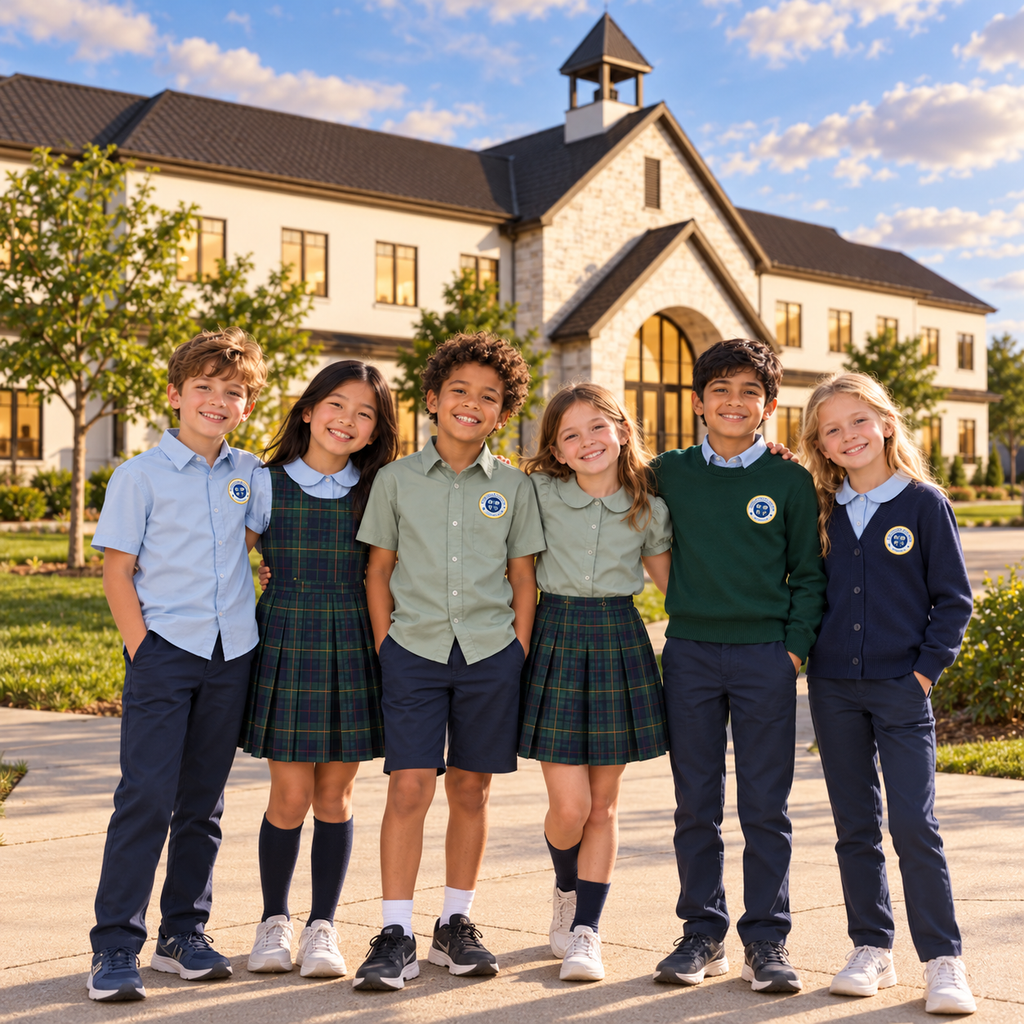
One question we hear often is, “Will the school have uniforms?” The answer is yes! We are developing uniform options that reflect the different ways our students will learn – from classroom discussions and community presentations to outdoor investigations and fieldwork. The designs include comfortable clothing for outdoor learning and more formal options for professional dress days, along with daypacks and reusable water bottles for adventure days. On regular campus days, families will be able to choose from either uniform style or mix-and-match pieces. For professional events, community visits, and fieldwork that calls for more formal attire, students will be asked to wear their dress uniforms. For outdoor adventures, students will wear clothing suited to movement, exploration, and changing weather – and bring a daypack and water bottle. Imagine students observing a mountain ecosystem – and later sharing their findings with a community partner – their clothing should help them participate comfortably and confidently. We are still refining the final designs, with attention to practicality, versatility, and ease of movement. The accompanying images offer a preview of the styles and colors we are exploring.
Progress Toward Establishing Our School!

Louisa May Alcott Community School reached a historic milestone in September 2026, becoming the first charter school in Utah to receive authorization for bond financing through the Utah Charter School Finance Authority for its first year of operation. For our founding families, it marks meaningful progress toward establishing the spaces and resources students will need to learn, grow, and thrive.
Clint’s Reptiles – Community
Meet-and-Greets!

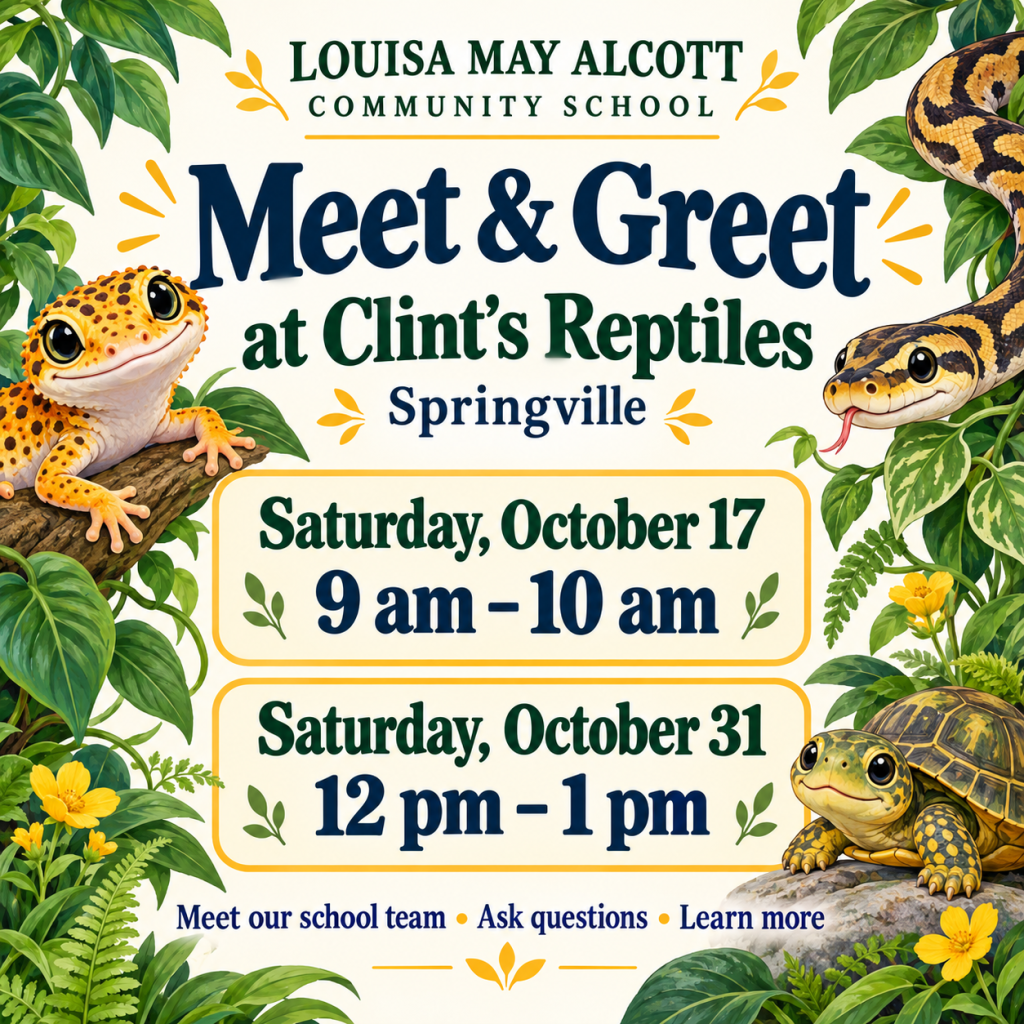
We are planning two community meet-and-greets in October at Clint’s Reptiles, 284 South Main Street in Springville, and we would love to see you there! Join us on Saturday, October 17, from 9–10 a.m., or Saturday, October 31, from noon–1 p.m. These informal gatherings will allow families to meet us, ask questions, and hear more about Louisa May Alcott Community School. Come talk with us about academics, outdoor learning, uniforms, the application process, and how our school will connect classroom learning with the surrounding community. A setting centered on reptiles also offers a fitting backdrop for conversations about curiosity, observation, and the questions children ask about the natural world. Whether you have been following the school’s progress for months or are just beginning to explore your options, we welcome your interest and ideas. Bring your questions and help us get to know the families who may
become part of our school community!
Join Our Interest List and Stay Connected

Be part of the journey from the very beginning. By joining our interest list, you’ll receive the latest updates on school announcements, enrollment details, upcoming events, and our future location reveal.

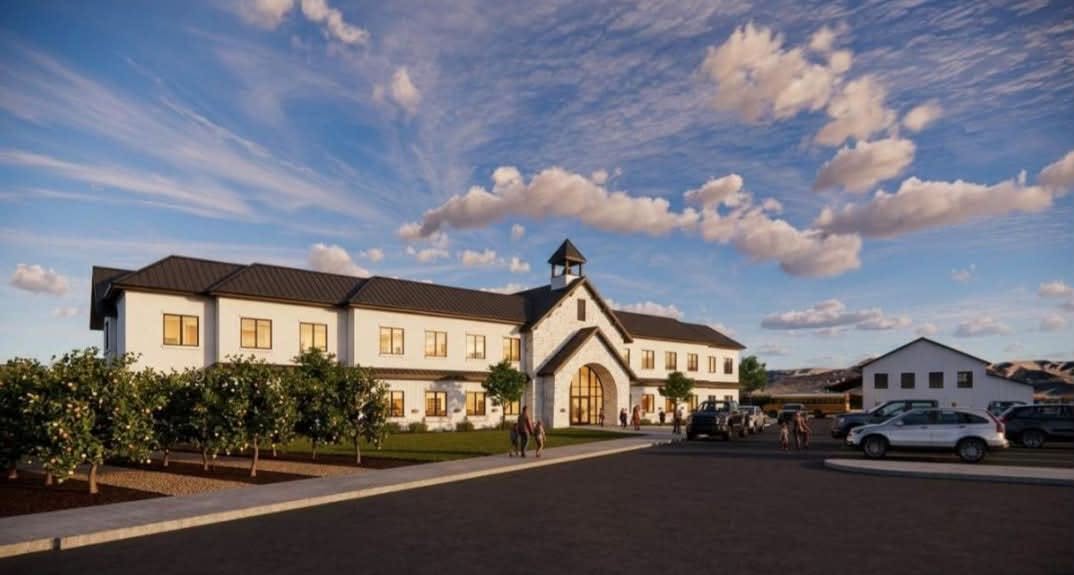
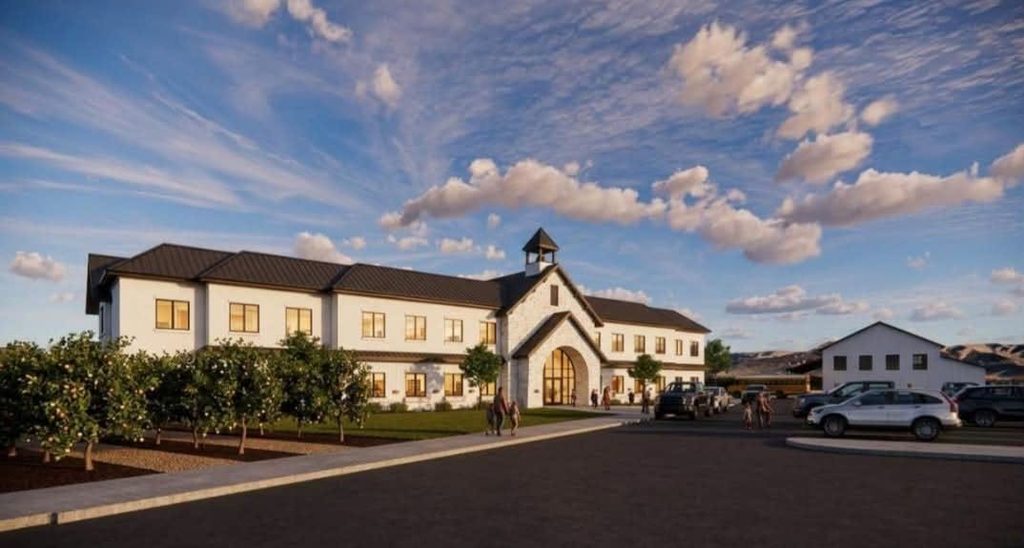
We are also excited to share our initial architectural rendering and site plan as we continue building a school designed to support collaboration, exploration, and community engagement.

Place-based Education Model – Learn More!

Community Connection and the Story Behind Our Name: Our school is inspired by the community of Concord, Massachusetts, where writers, philosophers, and educators came together to exchange ideas and shape American thought.

A Legacy of Inquiry and Collaboration: The Alcott, Emerson, Hawthorne, and Thoreau families helped inspire the Transcendentalist movement, which emphasized nature, personal growth, reflection, and civic responsibility.

Our Inspiration for the Future: We strive to foster that same spirit of curiosity, creativity, and community engagement by helping students learn from the people, places, and experiences around them.

Categories
Uncategorized

July 2026 Newsletter – School Design

School Design and Construction Update!

What a great building and design team! Babcock Design has provided plans responsive to our indoor and outdoor school needs. Inside, we have designed a large Makerspace connected to the Art classroom. Art, design, and STEM concepts will be integrated – allowing students to create and carry out projects across spaces. The Makerspace overlooks a Grand Library where students and families can engage in literacy support and check out books. Interactive kits with themes such as Backyard Stargazing, Family Birdwatching, Small Group Readers Theater, and so forth are available for checkout. Indoor classrooms have space for muddy boots and daypacks.

We are also planning flexible seating that allows for both independent and collaborative work. We have worked with the team to design an inviting entryway where students and families are welcomed with a fireplace and comfortable furniture. Outdoor classroom spaces will support science, math, literacy, gardening, nature studies, outdoor recreation, physical education, the arts, and more. Along with dedicated space for grade-level gardens, a large greenhouse with table heights for children, and orchard learning spaces, we are planning landscape elements that can be harvested. Play spaces are inspired by natural landscapes and provide additional opportunities for STEM learning. We are working with designers who value the social and academic learning that happens outside.

Introducing our new website!

WWW.ALCOTTCOMMUNITYSCHOOL.ORG

Our new website provides answers to questions about the school model and other important details. Check out our partners page and a collection of our monthly newsletters. In the coming weeks, we will add a calendar to the site with school and partner events!

Catch up with us at the Local Farmers Markets!

We have enjoyed meeting and visiting with many of you at the Springville Farmers Market! We look forward to seeing you at the Mapleton market and Spanish Fork events in the future. At the markets, we have a variety of activities for families, including rock painting, nature-themed books, and a scavenger hunt (with prizes). We also have materials you can take home, such as example unit overviews and Utah’s Every Kid Outdoor Passports (our newest partner).

Join Our Interest List and Stay Connected

Be part of the journey from the very beginning. By joining our interest list, you’ll receive the latest updates on school announcements, enrollment details, upcoming events, and our future location reveal.

We are also excited to share our initial architectural rendering and site plan as we continue building a school designed to support collaboration, exploration, and community engagement.

Place-based Education Model – Learn More!

Community Connection and the Story Behind Our Name: Our school is inspired by the community of Concord, Massachusetts, where writers, philosophers, and educators came together to exchange ideas and shape American thought.

A Legacy of Inquiry and Collaboration: The Alcott, Emerson, Hawthorne, and Thoreau families helped inspire the Transcendentalist movement, which emphasized nature, personal growth, reflection, and civic responsibility.

Our Inspiration for the Future: We strive to foster that same spirit of curiosity, creativity, and community engagement by helping students learn from the people, places, and experiences around them.

Categories
Uncategorized

June 2026 Newsletter – Driving into Place-Based Education

Part 1 – Learning through Community, Nature, and Inquiry

At Louisa May Alcott Community School, every aspect of our vision is grounded in meaningful connections—to learning, to community, and to the world around us. As we continue building our school community, we are excited to share more about the educational philosophy that guides our approach and the inspiration behind our name. Place-based education (PBE) is an approach to teaching and learning that uses the local community, environment, history, and culture as the foundation for meaningful learning experiences. Rather than viewing learning as something that happens only within classroom walls, students engage directly withthe places and people directly around them to explore authentic questions and solve real-world problems. The Louisa May Alcott Community School embraces six core elements of place-based education. Together, these elements help students build strong academic knowledge while developing critical thinking, collaboration, creativity, and civic responsibility. Students learn not only about their community, but also how they can positively contribute to it.

(Power of Place -Vander Ark et al.).

In a Place-based Education classroom, learning begins with curiosity about the world immediately surrounding students. Learners investigate local issues, ask meaningful questions, gather evidence, and design solutions that can improve their communities. Through interdisciplinary learning, students connect literacy, science, mathematics, social studies, art, and technology to authentic topics and experiences. As students study local places such as HobbleCreek Canyon, Utah Lake, or nearby farms and businesses, they develop a deeper understanding of how local systems connect to larger regional and global challenges. This approach fosters engaged learners who see themselves as capable problem-solvers, stewards of their environment, and active members of their communities.

Part 2 – Example Lesson Overviews

Hobble Creek Canyon – Third Grade Place-based Education Lesson

Essential Question: How does Hobble Creek Canyon support people, plants, and animals?

Students begin with a field experience in Hobble Creek Canyon, observing the creek, wildlife habitats, plant life, recreational areas, and evidence of humans interacting with the locale. In science, students investigate ecosystems, food chains, and the role of water in supporting living things. In mathematics, they collect and graph data such as tree types, plant growth, stream temperatures, or animal populations. During language arts, students read informational texts about canyon ecosystems and write persuasive letters encouraging visitors to learn about the canyon. In social studies, they learn about the history of the canyon, its importance to local communities, and how public lands are managed. Last, student teams identify a challenge, such as balancing recreation and land management, and create a stewardship project to share with families and community members. Students present their findings and solutions, demonstrating what they learned across subjects and how it can be applied to real community challenges.

Part 3 – Example Lessons Overviews

Investigating Bird Populations at Utah Lake – Fourth Grade Lesson Example

Essential Question: Why is Utah Lake an important habitat for birds, and how can we help protect the species that live there?

Utah Lake provides a rich opportunity for students to explore ecosystems, wildlife populations, and conservation efforts. In this lesson, students learn about common bird species found at Utah Lake, such as the American White Pelican, Great Blue Heron, CaliforniaGull, and migratory shorebirds. Through field observations, bird counts, photographs, videos, and data, students investigate how birds depend on the lake’s wetlands, fish populations, and vegetation. Students become scientists as they ask questions, collect evidence, and identify patterns in local wildlife populations.

In science, students study habitats, migration, adaptations, and food webs. In mathematics, they analyze bird-count data, create graphs, compare seasonal population changes, and calculate averages. During language arts, students read a variety of texts about bird species and write in field journals. In social studies, students explore how Utah Lake has changed over time and examine how communities, conservation groups, businesses, and government agencies work together to achieve both sustainable economic growth and the protection of wildlife habitats. Through design thinking, students identify a challenge affecting bird populations, such as habitat loss, pollution, or invasive species, and develop solutions such as public service announcements, promoting birdwatching at Utah Lake as a recreation activity, and sharing bird-friendly habitat designs, or creating community awareness. The lesson ends with a “Utah Lake Bird Festival” in which students share their research and promote Utah Lake as a birdwatching destination. Students could also partner with local organizations such as the Utah Lake Authority, local Audubon groups, or community volunteers to participate in bird counts and habitat restoration projects, helping students see themselves as active stewards in their community.

Join Our Interest List and Stay Connected

Be part of the journey from the very beginning. By joining our interest list, you’ll receive the latest updates on school announcements, enrollment details, upcoming events, and our future location reveal.

Leadership and Vision for the Future

Our school is guided by a dedicated board committed to helping bring this vision to life:

  • Carrie Ashcraft – Board Chair
  • Ken Bulpitt – Vice Chair
  • Reba Morgan – Treasurer
  • Melanie Bott – Secretary
  • Soana Grieder – Board Member
  • Cassidy Warren – Board Member
  • Michelle Bulpitt – Board Member
  • Chris Ashcraft – Board Member

We are also excited to share our initial architectural rendering and site plan as we continue building a school designed to support collaboration, exploration, and community engagement.

Place-based Education Model – Learn More!

Community Connection and the Story Behind Our Name: Our school is inspired by the community of Concord, Massachusetts, where writers, philosophers, and educators came together to exchange ideas and shape American thought.

A Legacy of Inquiry and Collaboration: The Alcott, Emerson, Hawthorne, and Thoreau families helped inspire the Transcendentalist movement, which emphasized nature, personal growth, reflection, and civic responsibility.

Our Inspiration for the Future: We strive to foster that same spirit of curiosity, creativity, and community engagement by helping students learn from the people, places, and experiences around them.

Categories
Uncategorized

May 2026 Newsletter – What’s in a Name? The Story Behind Louisa May Alcott Community School

At Louisa May Alcott Community School, every aspect of our vision is grounded in meaningful connections—to learning, to community, and to the world around us. As we continue building our school community, we are excited to share more about the educational philosophy that guides our approach and the inspiration behind our name.

Our mission is to create a learning environment where students are encouraged to explore, question, create, and contribute. Through authentic experiences and strong community partnerships, we are preparing students to become confident learners, compassionate citizens, and thoughtful stewards of the places they call home.

A Return to Meaningful Learning

Long before textbooks and digital classrooms, children learned through storytelling, exploration, problem-solving, and working alongside their families and communities.

Place-based education embraces these meaningful roots while preparing students for the future by connecting learning to local environments, history, culture, and real-world experiences.

Why Place-Based Education Matters

Research shows that students learn best when learning feels relevant and purposeful. Place-based education helps strengthen academic achievement while fostering creativity, collaboration, critical thinking, and social-emotional growth.

Whether students are exploring local ecosystems, participating in community projects, or conducting hands-on investigations, they gain a deeper understanding of how their learning applies to the world around them.

Join Our Interest List and Stay Connected

Be part of the journey from the very beginning. By joining our interest list, you’ll receive the latest updates on school announcements, enrollment details, upcoming events, and our future location reveal.

Learning Beyond the Classroom

At Louisa May Alcott Community School, Utah’s mountains, lakes, deserts, farms, businesses, and civic organizations become extensions of the classroom.

By combining rigorous academics with authentic experiences, students develop confidence, curiosity, resilience, and a stronger sense of belonging.

Growing Through Community Partnerships

Community partnerships play an essential role in supporting meaningful learning opportunities for our students.

We are excited to welcome the Jordan River Commission as our newest community education partner. Together, we look forward to creating experiences that help students better understand environmental stewardship, civic engagement, and the importance of caring for the places they call home.

Leadership and Vision for the Future

Our school is guided by a dedicated board committed to helping bring this vision to life:

  • Carrie Ashcraft – Board Chair
  • Ken Bulpitt – Vice Chair
  • Reba Morgan – Treasurer
  • Melanie Bott – Secretary
  • Soana Grieder – Board Member
  • Cassidy Warren – Board Member
  • Michelle Bulpitt – Board Member
  • Chris Ashcraft – Board Member

We are also excited to share our initial architectural rendering and site plan as we continue building a school designed to support collaboration, exploration, and community engagement.

Place-based Education Model – Learn More!

Community Connection and the Story Behind Our Name: Our school is inspired by the community of Concord, Massachusetts, where writers, philosophers, and educators came together to exchange ideas and shape American thought.

A Legacy of Inquiry and Collaboration: The Alcott, Emerson, Hawthorne, and Thoreau families helped inspire the Transcendentalist movement, which emphasized nature, personal growth, reflection, and civic responsibility.

Our Inspiration for the Future: We strive to foster that same spirit of curiosity, creativity, and community engagement by helping students learn from the people, places, and experiences around them.

Categories
Uncategorized

April 2026 Newsletter – A New Beginning: Building the Alcott Community School Together

The Louisa May Alcott Community is proud to share an exciting new chapter – one rooted in curiosity, connection, and purpose. As we begin this journey together, we are thrilled to introduce the vision behind Alcott Community School, where learning extends far beyond the classroom walls.

Our goal is to create a joyful and inclusive environment where every child is known, valued, and motivated to learn. We believe education is most powerful when it connects students to real-world experiences, helping them grow academically, socially, and emotionally.

A Place-Based Approach to Learning

At Alcott Community School, learning is deeply connected to the world around us. Through a place-based education model, students engage with their local environment and community partners in meaningful ways.

From hands-on experiences in gardens and greenhouses to creative exploration in makerspaces and literacy-rich classrooms, every aspect of learning is designed to be engaging and relevant. This approach helps students build essential skills while fostering curiosity, collaboration, and a deeper understanding of their community.

Partnerships and Community Collaboration

We are honored to work alongside families and local organizations to create enriching learning experiences. Through community events, family literacy nights, and collaborative projects, we aim to build a vibrant and connected learning environment.

We are also excited to announce new partnerships and sponsorships that support our mission:

  • Teton Science School
  • UVU – For the Love of Reading
  • Utah Society of Environmental Education

Join Our Interest List and Stay Connected

Be part of the journey from the very beginning. By joining our interest list, you’ll receive the latest updates on school announcements, enrollment details, upcoming events, and our future location reveal.

These partnerships will help expand opportunities for students and strengthen our connection to the broader community.

Leadership and Vision for the Future

Our school is guided by a dedicated board committed to building a strong foundation for the future:

  • Carrie Ashcraft – Board Chair
  • Ken Bulpitt – Vice Chair
  • Reba Morgan – Treasurer
  • Melanie Bott – Secretary
  • Soana Grieder – Board Member
  • Carl Spencer – Board Member
  • Cassidy Warren – Board Member
  • Michelle Bulpitt – Board Member

Looking ahead, our vision includes a thoughtfully designed campus inspired by historic architecture in Mapleton, Utah. Plans include outdoor learning spaces, a greenhouse, gardens, and innovative makerspaces that bring learning to life.

We are excited to share that the future school location will be announced soon – an important step in bringing this vision into reality.

Place-based Education Model – Learn More!

Website and article: “Before formal education, “the great majority of children learned within the context of their families, neighborhoods, and communities as they watched, listened to, and imitated adults, explored the natural and human-made world, and interacted with one another” (Smith, 2016).Getting Started with Place-Based Education (Teton Science School)

Video: In “Hood River Middle School, place-based learning makes student learning relevant and engaging by turning their local geography, culture, history, and economy into classroom lessons”. Place-based Education in Hood River, Oregon (Edutopia- Connecting Kids to their Community)

Podcast: “PBE as powerful, personalized learning models that can boost access and outcomes to better equip learners with skills to address the challenges of the modern world”. Getting Smart- a Place-based Education Podcast (Getting Smart – Choose an episode- listen and learn)